If you’re planning a new kitchen in Wolverhampton, one of the first decisions you’ll face isn’t a colour or a worktop, it’s a direction: modern or traditional. The honest answer is that neither style is automatically “better.” What suits your home depends on the age and layout of the property, how you actually use the space day to day, and how long you plan to stay put. In this guide we’ll walk through what genuinely separates the two styles, and which tends to work best across the different types of homes we see in and around Wolverhampton.
What actually makes a kitchen “traditional”?
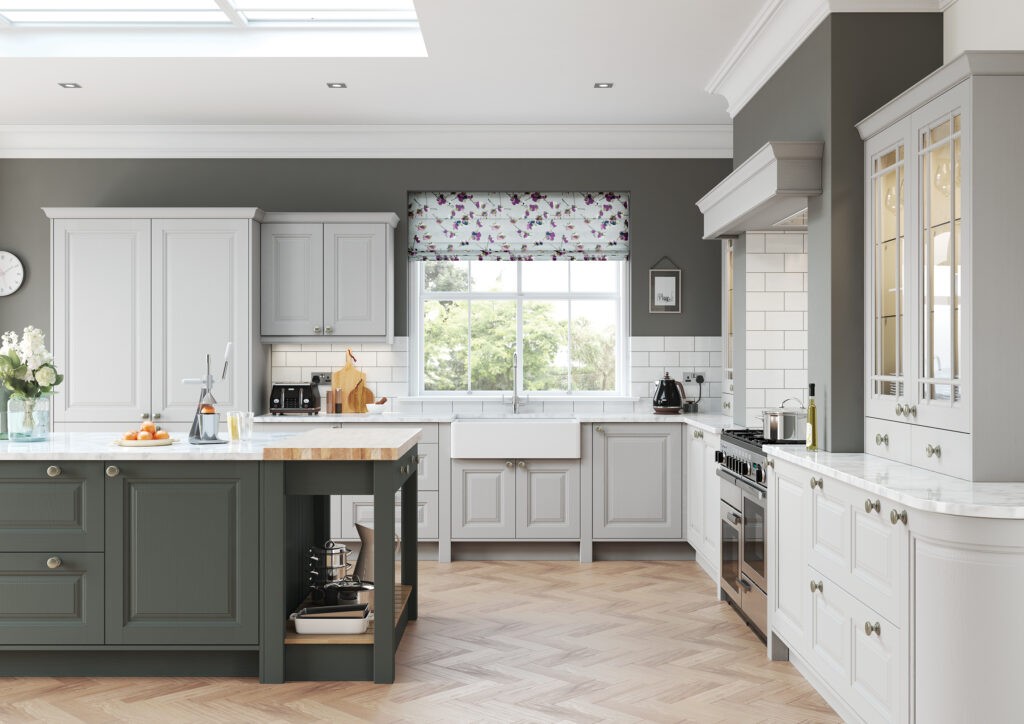
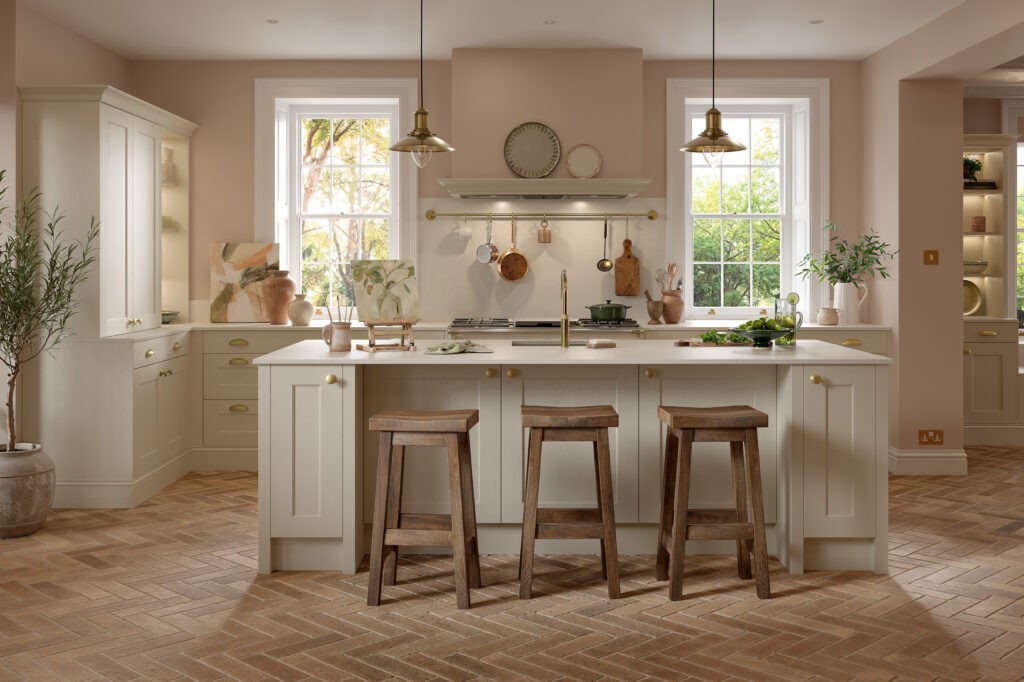
A traditional kitchen is defined by its doors, not its colour. Think shaker style frames with a recessed centre panel, visible handles, and often a painted or wood-effect finish. Traditional doesn’t have to mean dark or heavy. We fit plenty of pale, almost Scandinavian-feeling shaker kitchens that still read as “modern” in mood, purely because the door style is traditional in construction. The giveaway is always the panel and the handle.
What traditional kitchens do well is soften a room. In a property with original features, coving, skirting, a fireplace that hasn’t been ripped out, a traditional kitchen tends to sit more comfortably alongside them than a stark, handleless design does. It also tends to age more gracefully. A shaker door doesn’t look dated in ten years the way a very of-the-moment finish sometimes can.
What actually makes a kitchen “modern”?
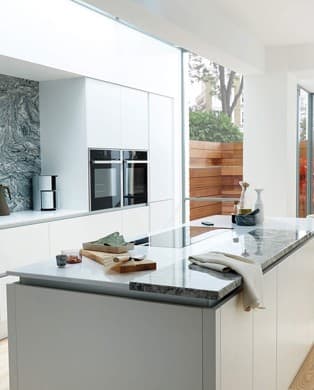
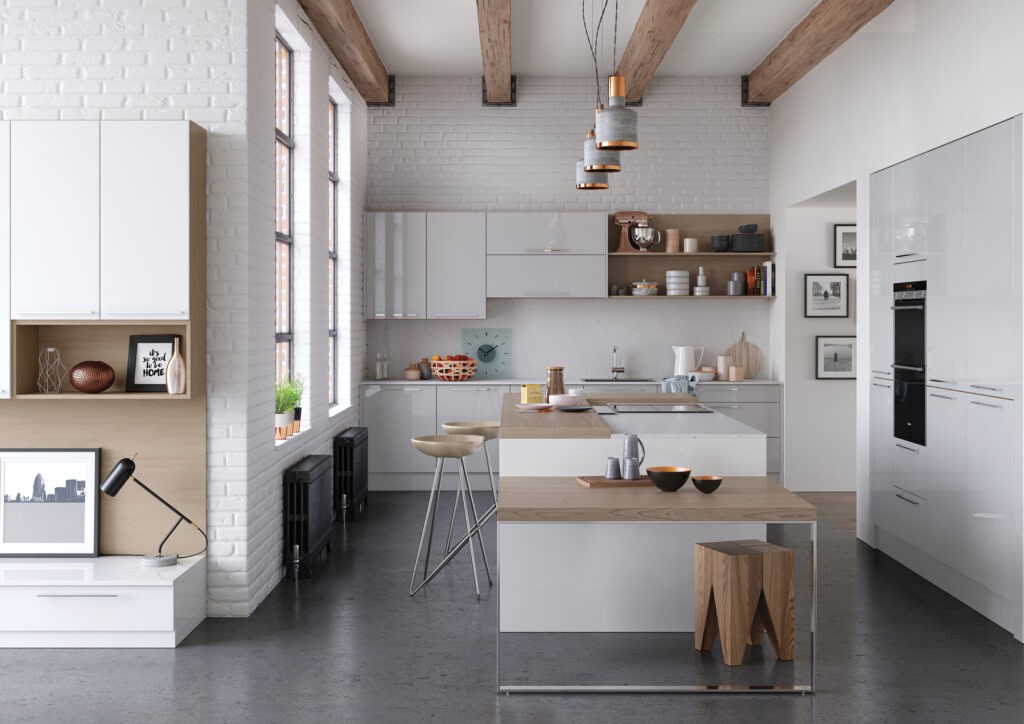
A modern kitchen is usually about the absence of detail rather than the addition of it. Handleless designs are the clearest example: flat, uninterrupted door fronts with a discreet channel or push-to-open mechanism instead of a handle. Slab doors, high gloss finishes, and integrated appliances all fall into the same family. The overall effect is a room that feels calmer and less visually busy, which matters more than people expect in a kitchen that’s also a dining space or opens into a living area.
Where modern kitchens genuinely earn their keep is in newer builds and open-plan layouts, where the kitchen is on show from the lounge or dining area all day. A handleless run of units reads less like “kitchen” and more like part of the room’s furniture, which is exactly the effect most open-plan homeowners are after.
What tends to suit Wolverhampton’s housing stock
Wolverhampton has a real mix of property types, from Victorian and Edwardian terraces close to the centre, to inter-war semis, to newer estate housing on the outskirts. As a general rule:
- Period terraces and semis with original coving, doors, or fireplaces tend to suit a traditional or shaker kitchen. It works with the bones of the house rather than fighting them.
- Extended or opened-up period homes, where the kitchen now flows into a dining or garden room extension, often suit a middle ground: shaker doors in a flat colour, with handleless drawers underneath for a slightly more current feel.
- Newer builds and open-plan layouts generally suit fully handleless or slab kitchens, where the kitchen needs to blend into the wider living space rather than stand apart from it.
None of this is a hard rule. We’ve fitted striking handleless kitchens into Victorian terraces where the homeowner wanted a deliberate contrast, and softer shaker kitchens into new-build homes for a warmer feel. The point is to make the choice on purpose, rather than by default because it’s whatever was trending when you started looking.
The middle ground: transitional kitchens
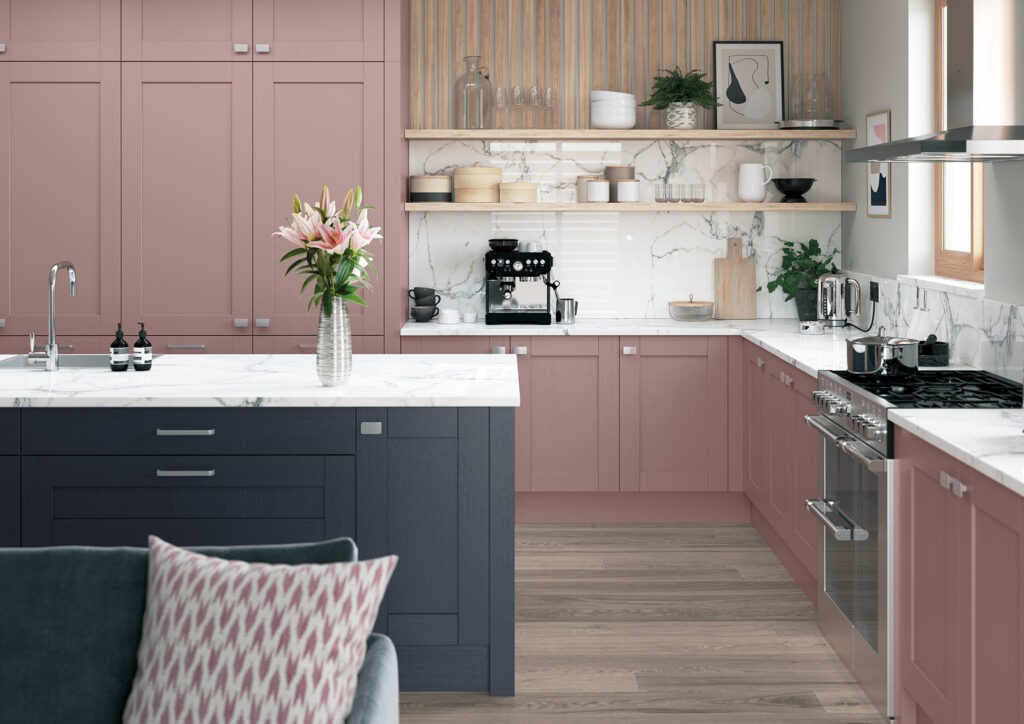
Most of the kitchens we design in Wolverhampton these days aren’t purely one or the other. A shaker door in a matt neutral colour, paired with brass or slim black hardware and an integrated appliance run, gives you the warmth of a traditional frame with a noticeably more current finish. It’s a sensible choice if you’re not fully committed to either camp, or if you want a kitchen that won’t feel tied to a single decade.
Common mistakes we see
The mistake we see most often isn’t picking the “wrong” style, it’s picking a style that ignores the room’s proportions. A fully handleless, high gloss kitchen in a small, low-ceilinged period kitchen can feel cold and out of place, no matter how well it’s fitted. Equally, a heavy, dark shaker kitchen in a small modern galley kitchen can make the room feel smaller than it is. Get the design right for the room first, then choose the style within that.
The second common mistake is choosing colours and finishes based on a showroom display rather than your own room’s light. A colour that looks striking under showroom lighting can read completely differently in a north-facing Wolverhampton kitchen with less natural light. It’s one of the reasons we always recommend a home visit before finalising a design.
Getting it right for your home
Every kitchen we design at our Wolverhampton showroom starts with a conversation about the room itself, not just a style board. That’s how we make sure the finish you fall in love with in the showroom still works once it’s in your own kitchen. If you’d like some visual inspiration before you commit to a direction, our brochure covers the full range of both traditional and modern kitchen styles.
Request a free brochure to see the full range of styles, or book a free design visit to talk through what would work best in your home.
Frequently asked questions
Is a handleless kitchen harder to keep clean than a traditional one?
Not really, though smudges and fingerprints show up more clearly on flat, glossy handleless doors than they do on a textured shaker panel. A matt handleless finish tends to hide daily marks better than a high gloss one if this is a concern.
Can I mix modern and traditional elements in the same kitchen?
Yes, this is what we’d call a transitional kitchen and it’s one of the most popular choices we design. A shaker door with handleless drawers, or a traditional cabinet layout with modern worktops and appliances, both work well.
Does a traditional kitchen cost more than a modern one?
Not inherently. Cost is driven far more by the materials, worktop, and appliances you choose than by whether the door style is shaker or handleless. Both styles can be specified at a range of price points.
Will a modern kitchen suit an older Wolverhampton property?
It can, particularly if the room has already been opened up or extended. In an untouched period room with original features still in place, a traditional or transitional style usually sits more comfortably, but it’s a personal choice rather than a rule.
How do I decide before visiting the showroom?
Start by looking at photos of your own room in daylight rather than showroom displays, and think about how the kitchen connects to the rest of your home. Bringing those photos to your visit helps our designers steer you towards the style that will genuinely suit the space.